Obishikokaang Abinoojii Onakoniikewin Meekanah

About
Obishikokaang has the Anishinaabe Onakoniikewin (legal, social and moral responsibilities) to our children, youth and families’ well-being. This is our inherent right based on the Creator’s law and our governance systems that have always existed.
In 2021 Chief and Council made the decision to begin the journey of reclaiming our jurisdiction and fulfilling our sacred responsibility to look after our families in our own way in accordance with our Anishinaabe Onakoniikewin. This involves writing down our laws and developing a service model based on our teachings and values.
Chief and Council decided to use An Act Respecting First Nation, Inuit and Metis children, youth and families (Bill C-92) as a tool gain government recognition of our laws and to access additional funding to implement our own system.
Goals
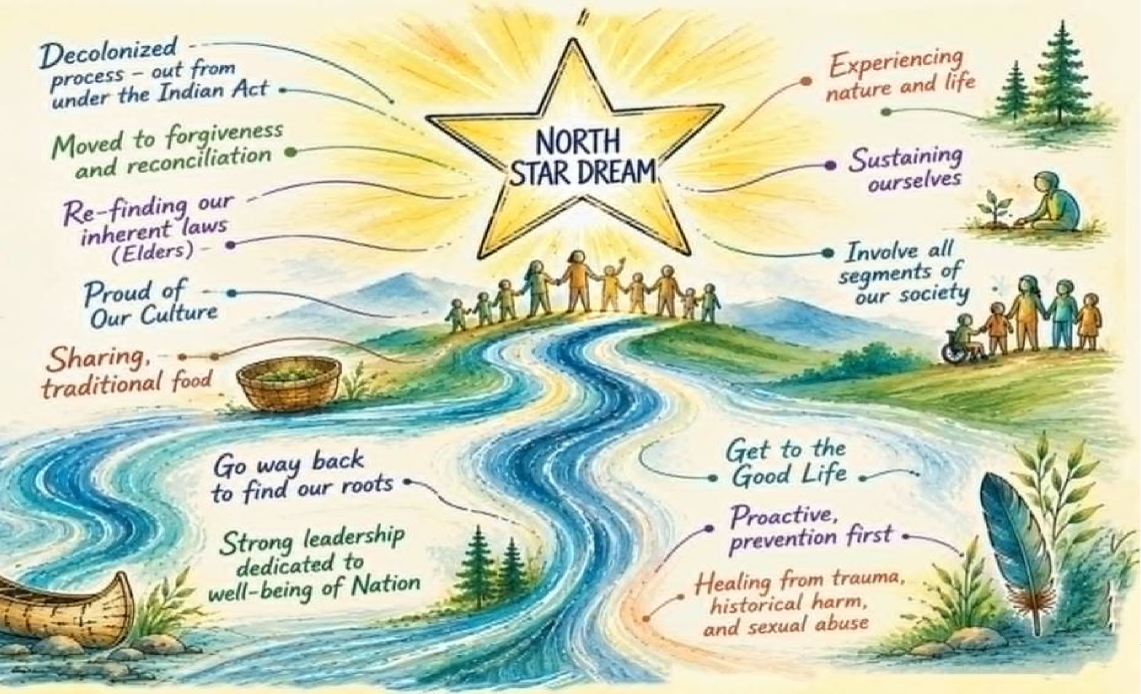
“It is the goal of Chief and Council to support a child and family law that is community driven and rooted in our language and culture. We believe that the band members have the potential to fulfill the mandate of the new law and we will be looking to our people to take on the necessary roles to ensure that our children and families are cared for in the best way, and according to who we are,” Statement from Lac Seul First Nation Chief and Council.
Assert Obiskikokaang’s inherent right to self-government over child and family services.
Write down our laws and take control by creating our own child and family model.
Strengthen and keep families together through healing and culture.
Develop a holistic healing model based on our teachings and values.
Remove the provincial laws and system (the Obishikokaang law will be above provincial and federal laws)
Obishikokaang jurisdiction will apply to all our families wherever they reside across Turtle Island.
Use Bill C-92 as a tool to gain government recognition of our laws and access funding to implement our own system.
The Path Home
Our Traditional Parenting
Our people honoured our Creator through our sacred ceremonies. Our way of life and the way we were was in the language. Our Elders were the carriers of medicine, and always had medicine to share. We were oral people. We learned, and cared by listening, and watching. We shared our stories, or legends, and this is where the heart of who we are originates. This is who we are.
Our people were nomadic. We moved with the seasons and lived along the lakes and the rivers. Our families travelled together and everyone had a respected role and knew what it was. Kokums were the matriarchs of the family, and Shomis was respected, as all Elders were. Grandparents taught their own children how to be good mothers and fathers. Kokum set the way for child-rearing, often showing the parents how to take good care of the children. Children loved and respected their Elders. This is who we are.
Families worked together to provide for all the necessities of life, and families helped families. Needs were always taken care of because everyone took care of each other and shared. The land provided everything and the People hunted, fished, and grew and gathered food. We took only what we needed. We were the caretakers of the earth, water, air and creatures. This is who we are.
Women made clothing and learned the skills of our ancestors like beading and making moccasins, and the children learned by watching. Children had important roles too, and helped with gathering wood, and even helped with preparing the meat provided by men after a successful moose hunt, fanning flies away with branches. Children were included in all of our activities. And in this way, children were always cared for and supervised by all the adults in the community. We regarded the children as very special beings. This is who we are.
NewsLetters
Frequently Asked Questions
-
Bill C-92, formally An Act Respecting First Nations, Inuit and Metis children, youth and families came into effect on January 1, 2020.
The Act aims to reduce the over-representation of Indigenous children in care and ensure they remain connected to their families, communities, and culture.
-
Bill C-92 does three things:
Affirms that Indigenous communities have the right to develop and enforce their own child and family laws and policies.
Creates minimum standards regarding the provision of child and family services for Indigenous families.
Breaks down barriers for Nations to have their laws recognized and supported.
-
Bill C-92 establishes the following legal principles:
Best interests of the Indigenous child: decisions must prioritize the child’s well-being and family connections.
Cultural Continuity: children should maintain ties to their Indigenous culture, language and traditions.
Substantive equality: Indigenous children must receive services that respect their rights and address historical disadvantages.
-
Our Anishinaabe Onakoniikewin (inherent laws) to look after our children and families has existed from the beginning of time, prior to the existence of any colonial government. Bill C-92 provides a framework and funding to implement our Onakoniikewin and ensure that it is respected and upheld by all child welfare agencies across Canada.
-
Immediate Benefit (as of January 2021)
The Act benefits families immediately (regardless of whether their Nation is developing a law and asserting their jurisdiction) because it requires that all agencies in Canada follow the minimum standards which impact decisions made about children including:
Keeping children with their family and community or helping to return children to their families.
Prioritizes the importance of children and youth staying connected with their language, culture and community.
Prioritizes prevention and early intervention to prevent children from going into care.
Financial, health or housing challenges shall not be the reason a child is separated from their family.
Future Benefit (once Obishikogaang’s Onakoniikewin is in place)
Once Obishikokaang’s Onakoniikewin is in place, we will have the funding, resources and recognition to run our own child and family model based on our inherent rights our unique culture, values, traditions and practices. We will look after our children and families based on our way of doing things based on our strengths and teachings.
-
Nations can determine how to phase their implementation and determine the scope of their law, whether it be prevention and protection and whether it apply to on and off-reserve. Obishikokaang has made the decision to proceed with full jurisdiction (prevention and protection to apply both on and off-reserve). This will be implemented in phases as we work towards full jurisdiction.
-
Bill C-92 affirms that a nation’s law will prevail over any provincial child welfare law. This was upheld by the Supreme Court of Canada in 2024.
-
We have spent the last five years doing extensive engagement and strategic discussions:
Multiple Engagement Sessions 2021 and 2023 (Whitefish Bay, Kejick Bay, Frenchman’s Head, Sioux Lookout, Red Lake, Thunder Bay and Winnipeg)
Front-Line Worker Sessions
Sessions with LSFN Departments
Elders Gathering
Youth Gathering
Youth and Elders Gathering
Chief and Council annual OAOM strategic planning and path oversight
Information booths (Treaty days, AGMs, Christmas Dinners)
Meetings of Task Force, Youth Council and Elders Council
-
The position of OAOM Director has been created to coordinate the process of drafting the law, the service model and continued feedback and discussion by different groups. Chief and Council have delegated a Task Force made up of:
Councillors with the Child Welfare Portfolio
CFRO
Family Wellbeing Lodge Directors (OAOM, OSG, Dehnawemakanug and Post Majority)
Youth and Elders/Grandparents
An Elder’s Council and Youth Council have also been developed to provide feedback and advice to the process.
-
We have gathered all the feedback, thoughts and information throughout the last five years (2021-2026) and now have a draft Onakoniikewin and service model. We will continue to meet with Youth, Elders, Leadership and the Task Force to make revisions to the law so that we have a version that can be presented to all community members in Winter 2027.
-
Once we have the law, service model and budget finalized we will enter into discussions with Canada and Ontario to enter into a Coordination Agreement (clearly identifies the roles and responsibilities of each party and how provincial laws will respect our Onakoniikewin) and a Fiscal Agreement (funding required to operate our model). This process takes approximately 12-18 months.
Once the Coordination Agreement and Fiscal Agreement are in place, we will go through a transition process as we move towards full implementation of our model and jurisdiction.